
Between 10 to 20% of children and young people with JIA develop inflammation of the eye. The reason for this is not known, but an immune process occurs within the eye similar to that of arthritis. As a result some of our patients have called this “arthritis of the eye”.
As with all conditions, there is a spectrum of severity, but most children who develop uveitis have a mild form that does not result in long-term complications.
However, it is difficult for parents, opticians and paediatric rheumatologists to detect the presence or amount of inflammation, which is why ophthalmology teams experienced in looking after children with uveitis need to see patients regularly. They can pick up inflammation early to allow treatment that prevents damage to the eye and loss of vision.
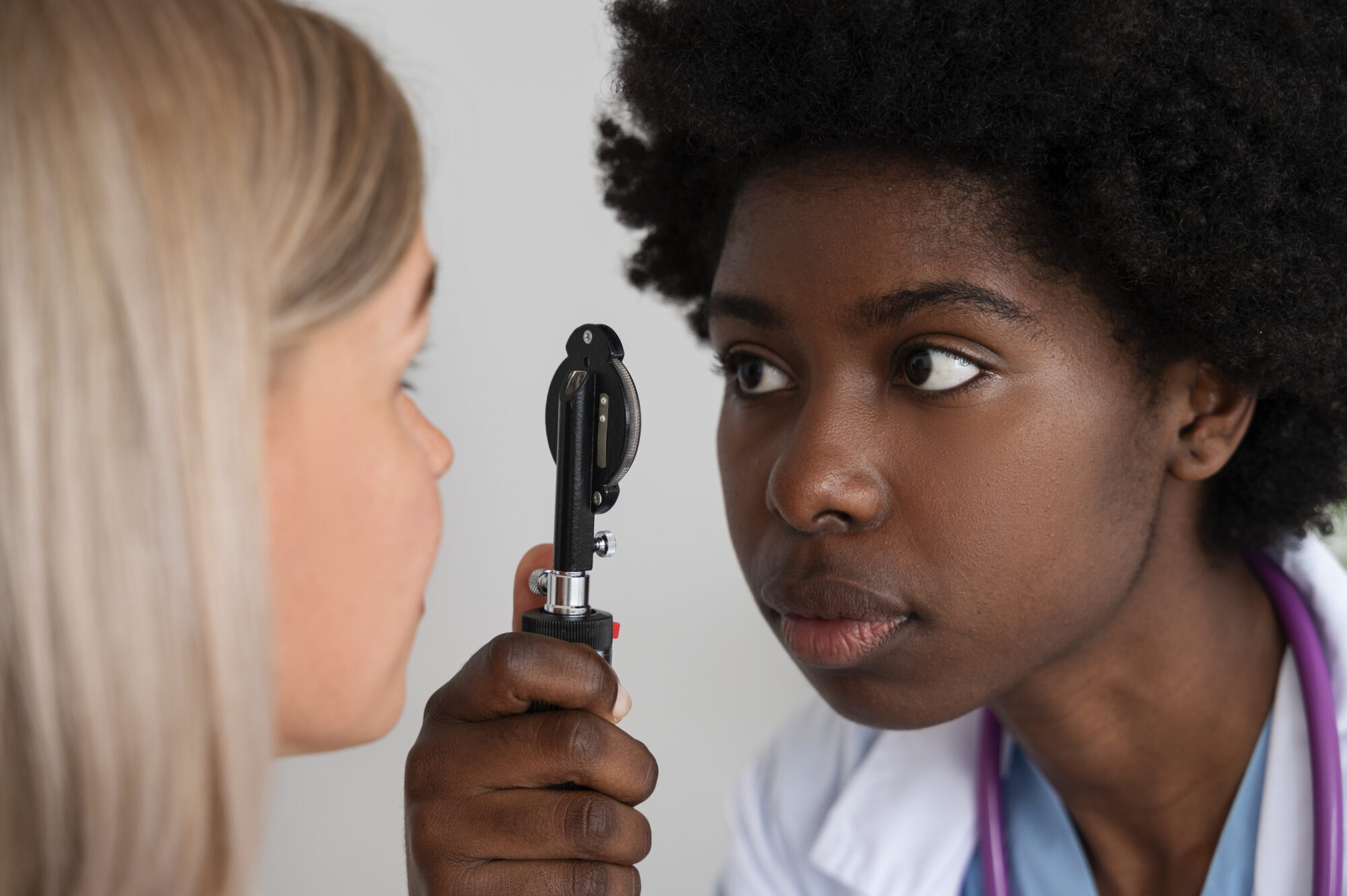
In many services there are joint clinics between the rheumatologist and ophthalmology team. This is to decrease the number of clinics you attend and also help with communication and treatment plans. Ophthalmology teams include an optometrist and/or nurse specialist who may perform the eye screening rather than the ophthalmologist. The eye screen includes an eye test and a big contraption called a slit lamp, which shines the light into the eye from the side and shows up the cells causing inflammation.
Unlike in adults, uveitis in children may go undetected for long periods because it does not cause a red eye or pain and because young children do not know to report subtle changes in their vision. Because of this there are national guidelines about who should have regular eye checks (screening) and how often. In short, most children with JIA under seven years of age are seen every 2 to 3 months for 3 to 4 years and then six monthly. After seven years of age the frequency is every six months and uveitis has never occurred this screening stops at 12 years of age. If there has been uveitis the patient needs eye screening every year into adulthood because it may return without warning although by this age most patients are able to detect floaters or other changes to their sight.
The frequency of eye screening is also influenced by the amount of inflammation present and by changes in treatment. In particular a child may need to be seen more frequently when drugs are reduced or stopped because this may uncover uveitis. These UK guidelines are based on the experience of professionals involved with writing them and differences in experience leads to differences in guidelines between countries.
The first eye screen is critical and should occur quickly after the first rheumatology appointment. 40% of all cases of uveitis are picked up at this time and early treatment is essential to a good outcome.
In the 1950s before screening programs and effective treatment began for uveitis 40% of children lost some degree of vision. On the other hand, this means that without treatment most children do not have significant complications.
Complications arise from prolonged inflammation (often months) and depends on the part of the eye involved. Most forms of uveitis in children affect the front of the eye (in front of the lens). This can cause deposits on the surface of the eye, an abnormal shaped iris because it sticks to the lens and the lens itself can develop scarring called cataracts. With time damage may build up to affect the drainage system of the eye. This may result in too much fluid and a high pressure called glaucoma, or too little fluid and low pressure called hypotony. Both of these complications can threaten the eye, but fortunately are now rare.
In other forms of uveitis the back of the eye or retina may be involved and this situation is called pan-uveitis. Involvement of the retina may also affect vision.
Eyedrops are the mainstay of treatment in all patients and steroid eye drops (Maxidex and Predsol) are used to gain control of active inflammation. In many children uveitis is mild and lasts up to 5 years and in these eye drops is all the treatment that is required.
If steroid eyedrops do not adequately control the active inflammation or the back of the eye is also inflamed steroids may be given by mouth or by injection into the eye socket underneath the eye ball. This is done under a general anaesthetic.
In those with, or at risk of, damage long term treatment is required and in general the same drugs are used as for arthritis. Methotrexate is often used first line and other long-term medication includes mycophenolate and the anti-TNF biologic agents Humira (adalimumab) and Remicaide (infliximab).
Other treatments include tacrolimus, azathioprine, cyclosporin and other biologic agents. Medications that are probably not effective include embrel ( etanercept) and leflunomide. Combinations of medication may be used and each treatment decision is given time to take effect. Your doctor or nurse will explain this when they also work out the benefit and potential for side effects of each drug.
Long-term treatment also helps to reduce the frequency of eyedrops. Regular use of steroid eyedrops, more than two drops per day, can impose on schooling and family routines plus over time steroids can also cause cataract.
Medications used for eye inflammation are only reduced and stopped when the uveitis has been fully controlled and no cells are seen when using the slit lamp. There is no good evidence to say how long eye disease should be treated before reducing long term medication. It is generally recommended that there should be remission (no cells seen) for at least two years or for a total treatment of longer than three years.
In the short term if the iris becomes sticky or odd shaped an eye drop called cyclopentolate (or similar) is used to keep the iris fully open. This prevents further damage, but it may cause short term blurring of vision and bright lights may be uncomfortable.
Cataracts that build up over time can be easily removed by taking out the affected lens under surgery. This is not technically demanding but the timing of this surgery is very important. There should be no inflammation at the time of surgery and medication should be carefully planned beforehand. This is because this surgery may provoke more inflammation and threaten the eye as a whole. A decision is also needed about whether to replace the natural lens with a synthetic one that goes into the eye or with a contact lens on the surface of the eye. This will be explained in detail by your surgeon.
Complications of glaucoma and hypotony are treated with other medication and sometimes other surgical procedures.
For more information please ask your nurse specialist, doctor or ophthalmologist. Click here for websites with further information.
For further information you can also visit the Olivia ‘s vision charity Olivias Vision.
For most children, uveitis is idiopathic. Idiopathic is the term used when we do not know what causes a disorder. More common examples of idiopathic disease include asthma, inflammatory bowel disease or juvenile idiopathic arthritis (JIA). Researchers are currently running projects to try to understand the mechanisms involved in childhood uveitis, which will help us understand the causes and might help us develop better treatments.
Your immune system is your body’s defence team, always on the lookout to fight off infections and heal injuries. Sometimes this defence team gets confused and attacks parts of your own body, like your eye, even when there’s no real threat. This can cause uveitis. One of the key troublemakers in this process is a protein called TNF-alpha. It acts like an alarm, telling your immune system to go into attack mode. When there’s too much TNF-alpha, it keeps the immune system overactive, causing more inflammation in your eye.
Anti-TNF drugs act like blockers or shields that stop TNF-alpha from sending out those “attack” signals. When TNF-alpha is blocked, the inflammation calms down, and your eye can heal. It’s like turning down the volume on an alarm that’s been ringing too loudly for too long. You might get these drugs as an injection under your skin (like Adalimumab) Through an IV drip in a hospital (like Infliximab). While these medicines work really well, they can make it easier to get poorly because they calm down your immune system. So, in short, anti- TNF drugs help control the inflammation in your eye by shutting down the overactive signals, giving your eye a chance to heal.
In a perfect world, we would be able to take tissue and fluid samples from inside a patient’s eye, understand the cell and protein signals that are keeping the uveitis active, and then pick a drug that we knew worked to reduce those particular signals. We don’t do this because it can be dangerous to take tissue and fluid samples from inside an eye with active uveitis, we don’t yet have a fast way to test for the cells and protein signals or to be sure which signals are causing the uveitis activity.
We and others are currently trying to solve this problem using tears to find signals-this would be a safer way to collect fluids although the signals are likely to be much harder to find compared to fluid inside the eye. For now, we select the medications which have the best chances of working for children with uveitis and watch them for a response (which can take several weeks to kick in).
There is no strong evidence on whether a gluten free, dairy free or plant free diet helps but as long as you keep talking to your child’s uveitis team, they will be able to support your choices around your child’s diet. An anti-inflammatory diet can be helpful for some and has benefits for general health.
For most children with uveitis, any vision loss happens in the early part of disease, before they start their oral or injected treatments. About one in five children will have lost some level of vision in one eye by the time they reach adulthood. They usually still have good vision with both eyes open. Only about one in 20 reach adulthood with poor vision in both eyes. This means that most young people with uveitis will enter adulthood with vision good enough to drive legally in most countries. Obviously the sooner effective treatments are started, the better the outcomes for vision. The risk of visual loss is highest with uveitis that affects the back of the eye (panuveitis or posterior uveitis). If you are concerned about vision loss or the type of uveitis your child has, do speak to your team.
Many thanks to
Dr Nick Wilkinson,Consultant Paediatrician and Paediatric Rheumatologist and
Dr Lola Solebo (NIHR Clinician Scientist, Honorary Consultant Opthamologist UCL GOS Institute of Child Health and Great Ormond Street Hospital)
for their contribution to the above FAQ’s
Helpful videos about Uveitis
These videos were created by children and young people affected by Uveitis and funded by the NIHR Great Ormond Street Hospital Biomedical Research Centre.
Childhood Uveitis
Childhood Uveitis Research
Uveitis Research
We have links to researchers working on research related to uveitis – to read more about this important work and any current patient involvement opportunities please visit our Research Hub.
