
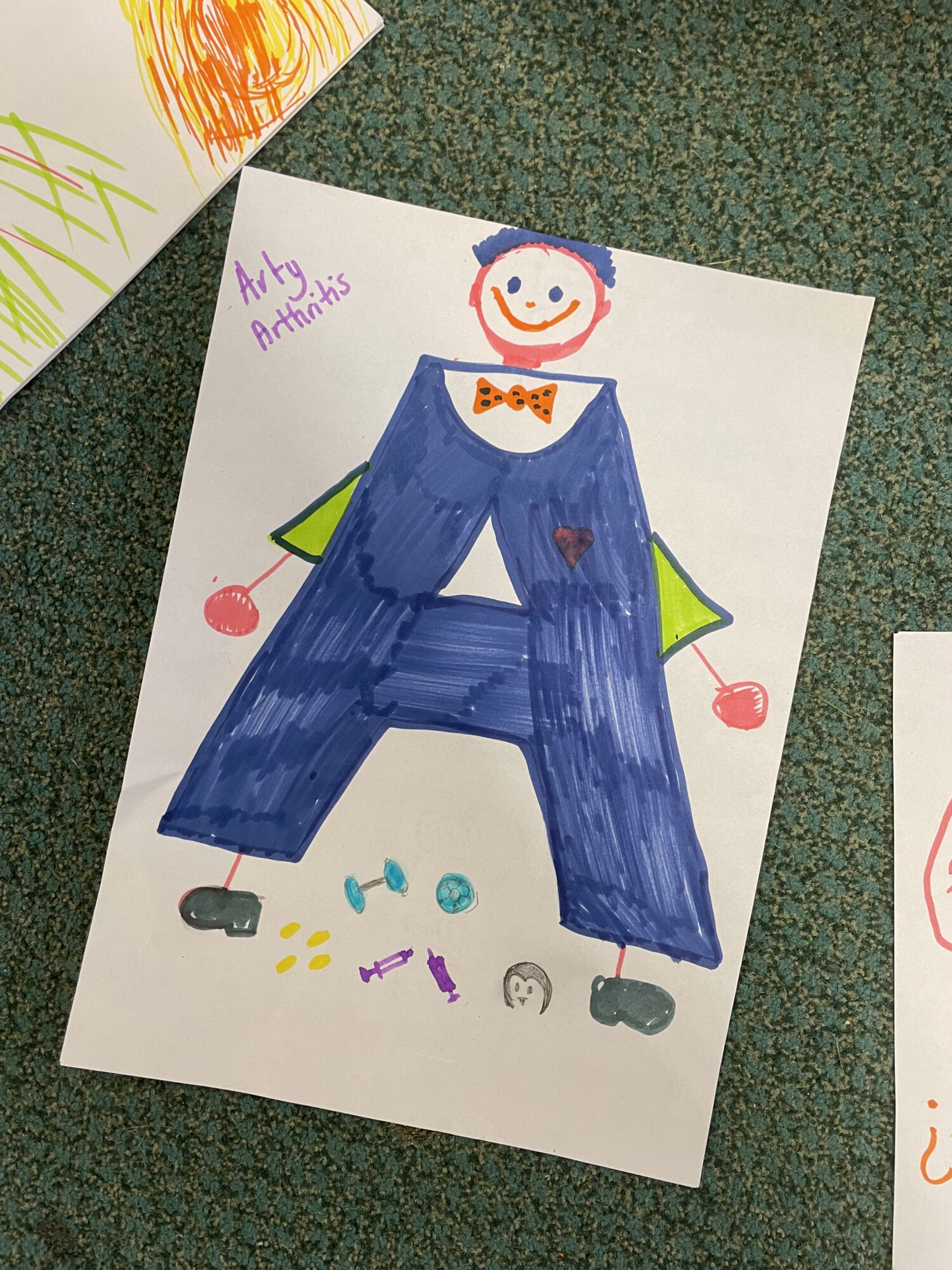
The way arthritis affects school life can vary from child to child—and even from day to day. Some days may be more challenging than others, so flexibility and understanding are important. Building a positive relationship with your child’s school and teacher is key. Open communication between parents, teachers, and the child helps ensure the right support is in place.
Many teachers may not have supported a child with Juvenile Idiopathic Arthritis before. Sharing clear information about your child’s condition can really help them feel confident in providing the right support. (You’ll find helpful resources and links below.)
THE FIRST STEP – Every young person with JIA in school should have an Individual Healthcare Plan (IHP), / Cynllun Iechyd Unigol (CIU) setting out information about their condition and the support they need to be safe and included at school. The IHP should describe their condition, how it is best managed, and the impact it has on their learning and behaviour, including any medication side effects. A clear emergency protocol must also be included, including when an ambulance should be called.
Every child with a medical condition is entitled to an IHP, (it is important to note that this is different to an EHCP.) Arrange an initial meeting between you as the parent/carer and education staff to talk about the diagnosis, the IHP and information about how the condition affects the child daily.
NEXT – at the beginning of each new school year ask for a meeting with the child’s new teacher. Information should be passed on but don’t presume that it will. Be prepared to inform your school and teachers about your child’s needs.
The School Series – Arthritis UK (formerly Versus Arthritis)
For those of you with secondary school age children and young people, we would recommend ‘The Versus Arthritis School Series’ available on You Tube. Some of the films are for young people living with arthritis and their families – sharing top tips and support. Others are for school staff – highlighting how to create inclusive schools and support young people to thrive.
‘Rheum for Us’ – a webinar for teachers and education providers
Would your child / young person’s school like to know more about living with a paediatric rheumatology condition?
Would you like your child’s teacher to find out about ways to support your child better?
If so please feel free to share with them this link to a webinar hosted by Arthritis UK aimed at education providers, featuring a speaker from CCAA.
The webinar is for anyone providing education to have a greater understanding of JIA (and related rheumatic conditions) and the barriers young people might face navigating their condition while in education. It will cover ways young people can be supported to reach their full potential. Speakers include a young person living with JIA, a healthcare professional, a JIA parent, and a youth worker.
Special Educational Needs and Disabilities (SEND)
A child or young person has SEND if they have a learning difficulty or disability which calls for special educational provision to be made for him or her.
Special educational needs and disabilities (SEND) that affect a child’s ability to learn can include their:
- Behaviour/ability to socialise
- Reading and writing, e.g. they have dyslexia
- Ability to understand things
- Concentration levels
- Physical needs or impairments
SEND Code of Practice 2014
In September 2014 a new duty came into force in schools to support pupils with medical conditions. This Code of Practice covers children and young people from 0-25 years. It is statutory guidance for organisations which work with and support children and young people who have special educational needs or disabilities. It’s aim was to transform the system for children and young people with a special educational need to ensure that ALL can succeed and
that services consistently support the best out comes for them.
Supporting pupils with medical conditions at school
Children and young people with medical conditions are entitled to a full education and have the same rights of admission to school as other children. The governing body must ensure that arrangements are in place to ensure that such children can access and enjoy the same opportunities at school as any other child.
SENCO (Special Educational Needs Co-Ordinator)
Every School/ Pre-School/Nursery provision will have a staff member allocated as SENCO who co-ordinates the child’s support programme. This member of staff should be a member of the school leadership team. They should also hold the National Accreditation for SEND Co-ordination at a Masters level.
At the initial meeting with school, ask if the SENCO can be present at the meeting with the class teacher. As a result of the initial meeting with school a medical or care plan should be put together which would then be reviewed regularly with parents, teaching staff and the child themselves. This would detail information about the child’s condition and include medication they are on and medical professionals they are under.
Schools will offer different levels of support based on the specific needs of a child. It may be informal monitoring of the child’s progress by the class teacher or it may include more formal support eg: visits from an Occupational Therapist to advise and support school staff.
If all strategies put in place are not successfully supporting the child’s educational progress then schools would work with outside agencies to put together a specific Education, Health and Care Plan EHCP (previously known as a Statement), a legal document which outlines a child’s needs and how these needs might be met.
Schools are legally required to support young people with arthritis, so that their condition doesn’t put them at any disadvantage to their peers in terms of access to school buildings or the opportunity to reach their full potential with their studies.To achieve this, schools are required by law to make any reasonable adjustments necessary to help the young people overcome barriers caused by their condition.
Helpful Education Resources
Websites
- Independent Parental Special Education Advice (IPSEA)
- ABRSM – Additional time for music exams
- National Association of Special Educational Needs
- Young Minds Website for children and parents
Leaflets / Downloads
CCAA would like to thank Gemma Brierley, an executive headteacher and JIA parent, for helping us deliver an informative and helpful education page. We are very grateful for your ongoing support.