
Dear Recently Diagnosed Family
We want you to know that we understand how you are feeling, and we would very much like to support you and your family through the course of your journey with JIA.
Life may seem unreal and challenging with a whole host of new people to meet, appointments to attend, medications and new vocabulary to learn and understand. However, please be assured that life will settle down again and you will find a new normal with your family.
Once the condition is under control, the vast majority of children and young people with JIA go on to lead a full and active life and keep up with their peers – we have families with ballerinas en pointe, sports stars , mountain climbers and everything in-between !
There is a lot of information on this website which we hope will help you. We have selected some key pages which we think may be of use at the start of your journey with JIA, and which other newly diagnosed families have told us they found helpful.
Be kind to yourselves and take time to get used to the new situation you are in. Remember you are not alone with JIA and please don’t hesitate to reach out to us either via email or one of our CCAA Local Area Groups.
We hope you will find the information below helpful and informative, if there is anything else you would like to know please get in touch and we shall do our best to help.
Welcome to the CCAA
Allow your child time to process what is happening. When our daughter had a flare for the first time after coming off meds and I told her we had to go for an appointment at the hospital she got upset and said she wasn’t going. Two days later she came with me no problem. She needed the time to process the new situation.”
Overview of JIA
What is JIA?
JIA (Juvenile Idiopathic Arthritis) is a condition that starts when you are young (Juvenile), it has no known cause (Idiopathic) and it causes inflammation (swelling) in the joints. There can sometimes be inflammation in the eyes (Uveitis). A small number of children also develop inflammation in other organs in the body and can experience fevers and rashes – this form of JIA is known as Systemic Onset JIA (SJIA).
JIA is an autoimmune condition – this means that the body’s immune system does not work as it should. The job of the immune system is to protect your body but in JIA, the immune system goes into over-drive.
Symptoms
Inside your joints, there is a small gap filled with fluid between the bones. When JIA is ‘active’ (known as a ‘flare’), the immune system produces too much fluid in this area and the lining of the joint gets thicker. This is why joints sometimes look swollen and they can feel warm to the touch.
Treatment
Doctors and healthcare teams work hard to find the right medicine as well as the right amount of physical activity and physiotherapy to keep the JIA from being active. The aim is to send it into remission meaning that it is not active and does not affect you in any way. In some children and young people this is straight-forward and in others it takes time. This is because scientists do not yet know which medicines work best for which person and every child or young person’s journey with JIA is unique.
Research into new treatments
There is a huge amount of research underway at the moment to find a way of ‘personalising’ treatment – the right medicine for the right person at the right time so hopefully soon it will be easier for healthcare teams to be sure what the best approach is for each patient. In the meantime, rest assured that the vast majority of children and young people do very well with their JIA. They find the right treatment for them and are able to get on with their lives and achieve academically, socially and physically alongside their peers. Some may grow out of their JIA whereas a smaller group may keep their JIA as they grow up.
Living with JIA
A typical life with JIA would include episodes of flares with stretches of remission (disease inactivity) in-between, although some may only ever have one flare. Families can find the unpredictability hard especially at the start, but most would agree that it is best to take one day at a time.
Turn to trusted sources of information e.g. this website or information from your tea, rather than ‘Dr Google’! There is a lot of misinformation out there which can be unhelpful
Give your child choice where it is possible. So much is out of their control – first their body is out of control, then the meds and all the appointments. Even little choices can help them regain some control e.g we told our daughter she had to have her methotrexate injection on a Saturday: she chose that it would be done in the morning.”
From Parent to Parent
We asked families living with JIA to pass on any key information that they felt would have been useful at the start of their journey. Some of their pearls of wisdom are spread throughout this page to help you on yours.
Take it one day at a time and try not to worry about the future.
You are not alone with this even though it might seem that way. Reach out to other parents on your Local Area Group and you will quickly find others who understand how you feel.
FAQs
We have put together some frequently asked questions specifically for newly diagnosed families. We hope they can help you in your journey.
There are a lot of new words to learn! You will often see the letters ‘mtx’ written and this is short for the medicine – methotrexate.
Useful information and Resources
We have compiled some resources which we think may be particularly useful to you at this stage of your JIA journey and which we know have helped other newly diagnosed families. If you have any other questions about any of these or anything else, please don’t hesitate to get in touch.

CCAA Weekends
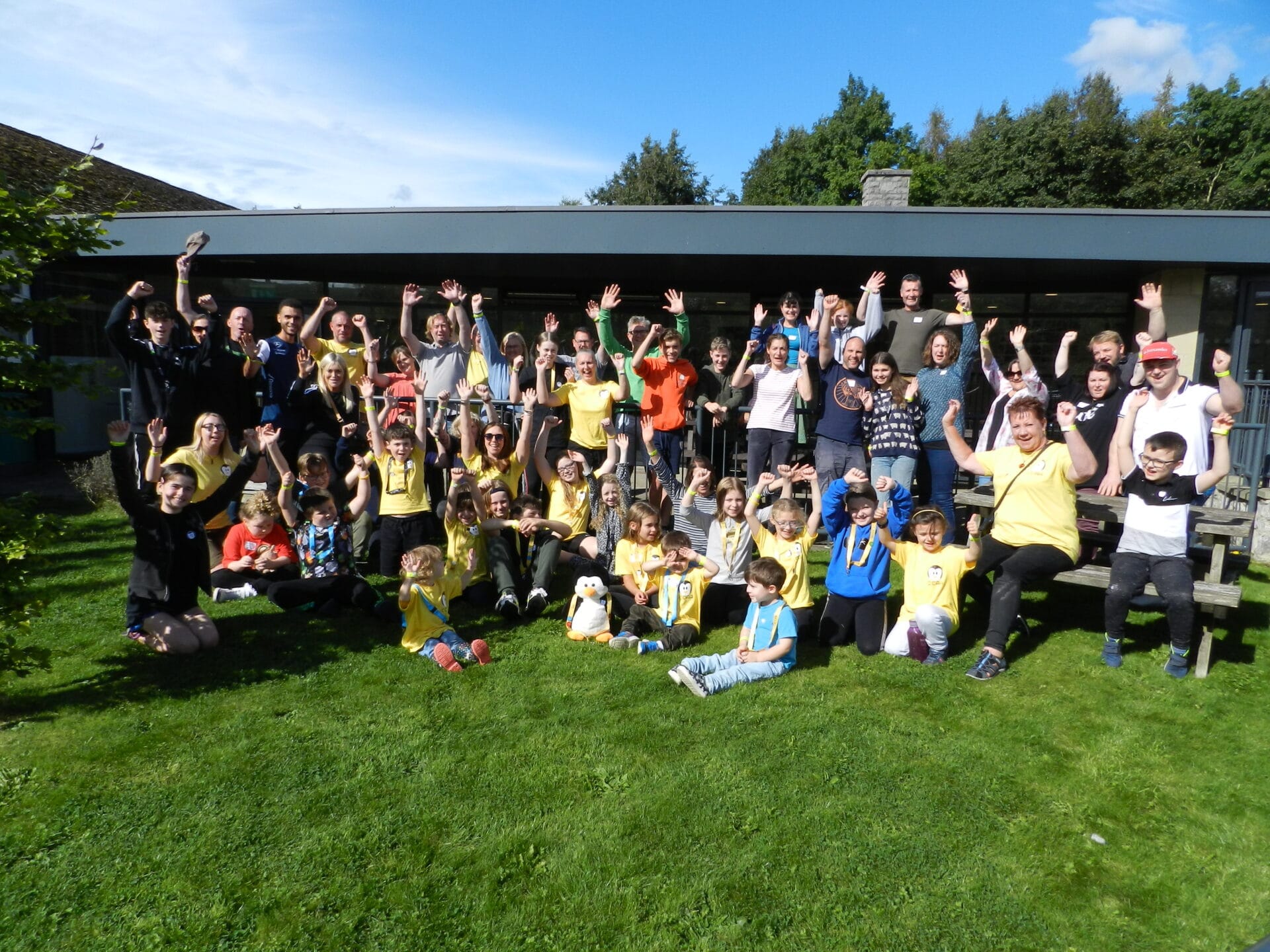
The CCAA Family Support weekends are designed to be fun, active and informative for children with JIA and their families. We love to meet you all and for you to meet each other! CCAA hold two weekends a year – one in the North of England and one in the South.

CCAA Local Groups
Find your nearest local support group/s from our network of friendly community groups across England and Wales. This is an easy way to ‘meet’ other families who may live near you and who may be treated at the same hospitals as you.
And relax! Now you have answers and you are believed you can do something about it and things will improve.
Tips & Tricks
Download our Tips & Tricks leaflets, written by parents for parents, about:
Useful Books
The Abilities in me
This picture book is dedicated to children with Juvenile Idiopathic Arthritis, also known as JIA. Explore the day in the life of a young boy with JIA, through bright, colourful illustrations and text. Perfect for teachers, parents and children alike, this book will bring awareness of the condition and teach children how to be supportive and be kind.
This books shows how each child can celebrate their abilities within their disability, find acceptance and create awareness to those around them.
Tosh’s Island
Book by Linda Sargent and Joe Brady
Ages 8-12
Tosh’s upbringing feels close to perfect: best friends, mischief and secondary school, just around the next corner. But when chronic illness strikes, it threatens to derail everything she loves.
A mixture of fact and fiction, as the author, Linda Sargent, was diagnosed with Juvenile Arthritis at age 11, you can read more about Linda in a piece she wrote for Book Trust here
Healthcare Plan (IHP) /Cynllun Iechyd Unigol (CIU)
For the JIA specific individual healthcare plan or IHP – fully downloadable template full of tips and ideas to help the school support your child.
Healthcare template: Individual Healthcare Plan
Healthcare template in Welsh: Cynllun Iechyd Unigol (CIU)
Web link to further information: Individual Healthcare information
Videos of Procedures
The Charity What? Why? Children in Hospital, create videos that your child may need to help them (and you) prepare for hospital procedures. They have videos of joint injections, infusions, blood tests etc.
See the videos on their website: Visit the What? Why? Children In Hospital website
Don’t panic. It really can go into complete remission, My son has been symptom free and drug free for over 18 months now!